Introduction to common valve materials
When choosing the material of the valve, you need to choose according to the properties of different media, such as the corrosiveness, temperature, pressure, etc. of the medium.
一. PVC valve
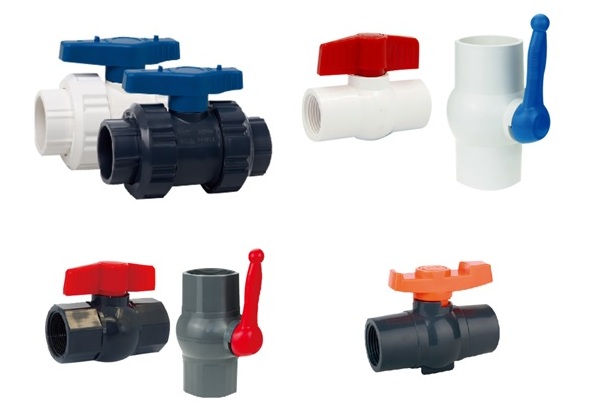
PVC valve is one of the most common valves on the market and one of the most widely used valves. It is suitable for most corrosive media, such as corrosive liquids such as acids and alkalis. PVC valves have the advantages of good flame retardancy, corrosion resistance, and pressure resistance. The disadvantage is that the heat resistance is poor and it is only suitable for media within the range of 0℃~45℃.
二,PP valve
PP valve is made of polypropylene, which has excellent corrosion resistance, acid and alkali resistance, and also has good mechanical strength. PP valve is suitable for chemical industry, electroplating industry, water treatment industry, etc. The disadvantage is that the heat resistance is not as good as other materials.
三,PE valve
PE valve is made of polyethylene and is suitable for water treatment, sewage treatment and other industries. PE valve has the advantages of corrosion resistance and wear resistance, but its compressive strength is poor.
四,PVDF valve
PVDF valve is made of polyvinylidene fluoride, which can withstand more severe media environments, such as acids, alkalis, organic media, etc., and is suitable for chemical and semiconductor industries. PVDF valve has the advantages of high strength, corrosion resistance, and high temperature resistance.
When choosing the material of the valve, you need to choose according to the properties of different media, such as the corrosiveness, temperature, pressure, etc. of the medium. At the same time, you also need to consider factors such as the application environment and operation method of the valve.
In short, when choosing a plastic valve, you need to fully consider multiple factors such as the properties of the medium, the application environment, and the operation method to choose the valve material and type that suits you.